
Our Satelligence team has returned from an exciting edition of New York Climate Week. Amid panel discussions, workshops, and networking events, our colleagues kept a keen ear out for this year’s recurring themes…
Supply chain resilience. Business resilience. Security of supply. Sustainability-linked finance. EUDR and other regulatory challenges.
None of these topics were particularly surprising, but what did stand out was how the conversation around resilience is evolving.
Resilience is now a question of action
Finally, the conversation was not simply about defining what a resilient supply chain looks like. We are encouraged to see that the focus moves increasingly towards what it actually takes to build resilience, and how to decide where action and investment can have the greatest impact.
For companies sourcing agricultural commodities, resilience ultimately comes back to the practical question of:
“how do you protect the security of supply whilst deciding where to invest, adapt, or mitigate risk?”
The answer depends on having a clear picture of what is happening across the landscapes and supply chains that companies depend on. Nature and climate intelligence is already being implemented to help identify risks and opportunities, but the challenge is connecting these data to financial and operational discussions. That can mean decisions such as continuing to source from a region, investing in a supplier or landscape, or considering a different intervention.
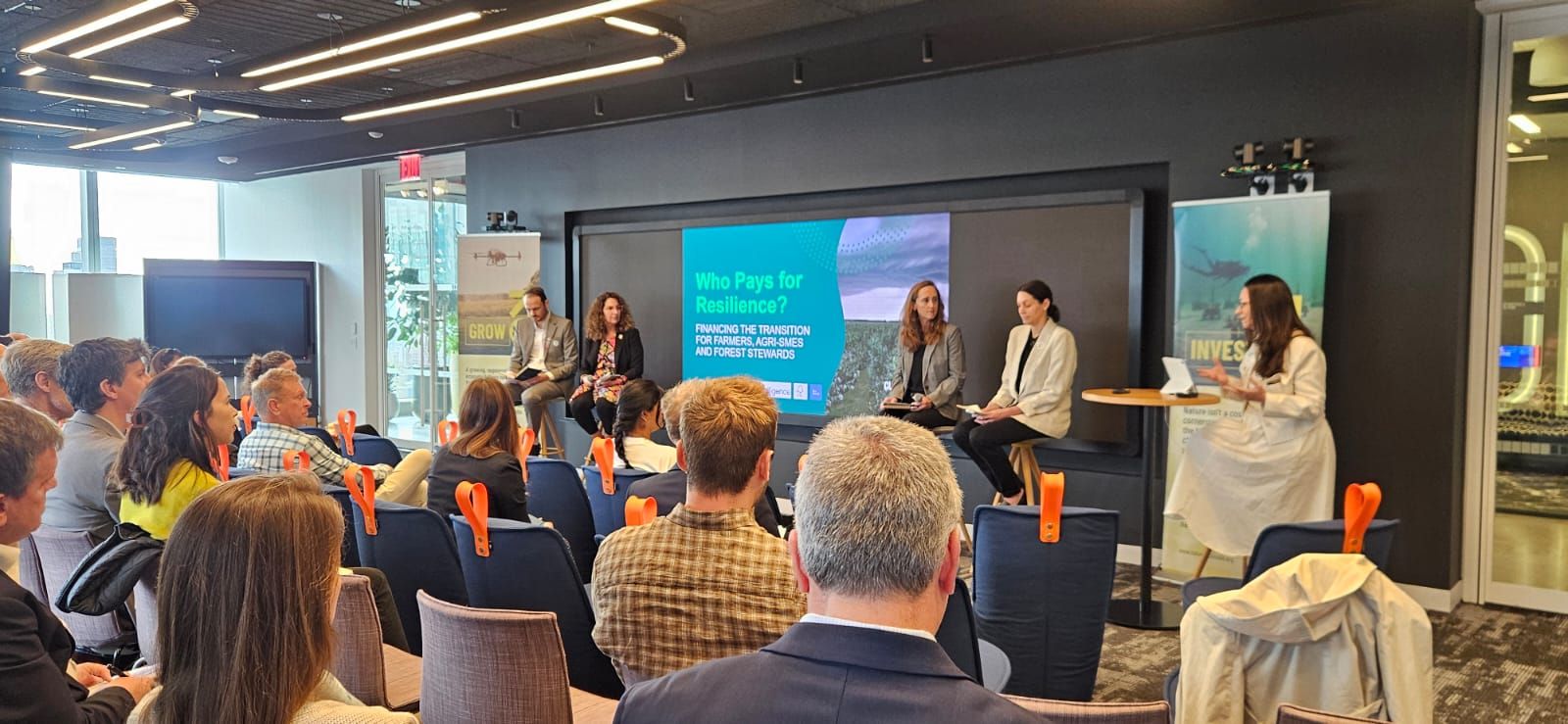
Satelligence Business Development Director, Nanne Tolsma, discusses what resilience means to different players up and down the supply chain.
Robust decisions need comparable nature & climate data
Another theme present across New York Climate Week was the need for carbon data that is granular, consistent, and comparable. As more environmental datasets are brought into procurement, sustainability, and climate decision-making, the quality and consistency of the underlying data matters.
This is one reason why we were particularly encouraged by the interest in Satelligence’s recent partnerships with HowGood and Sourcemap.
Through our work with HowGood, Satelligence’s dLUC (direct Land Use Change) and jdLUC (jurisdictional direct Land Use Change) data is being integrated into HowGood’s platform, connecting location-specific land-use information with product and ingredient-level sustainability intelligence. With Sourcemap, Satelligence’s LUC and DCF (Deforestation- and Conversion-Free) data is integrated into a secure supply chain repository, connecting geospatial insights with supply chain mapping and procurement intelligence.
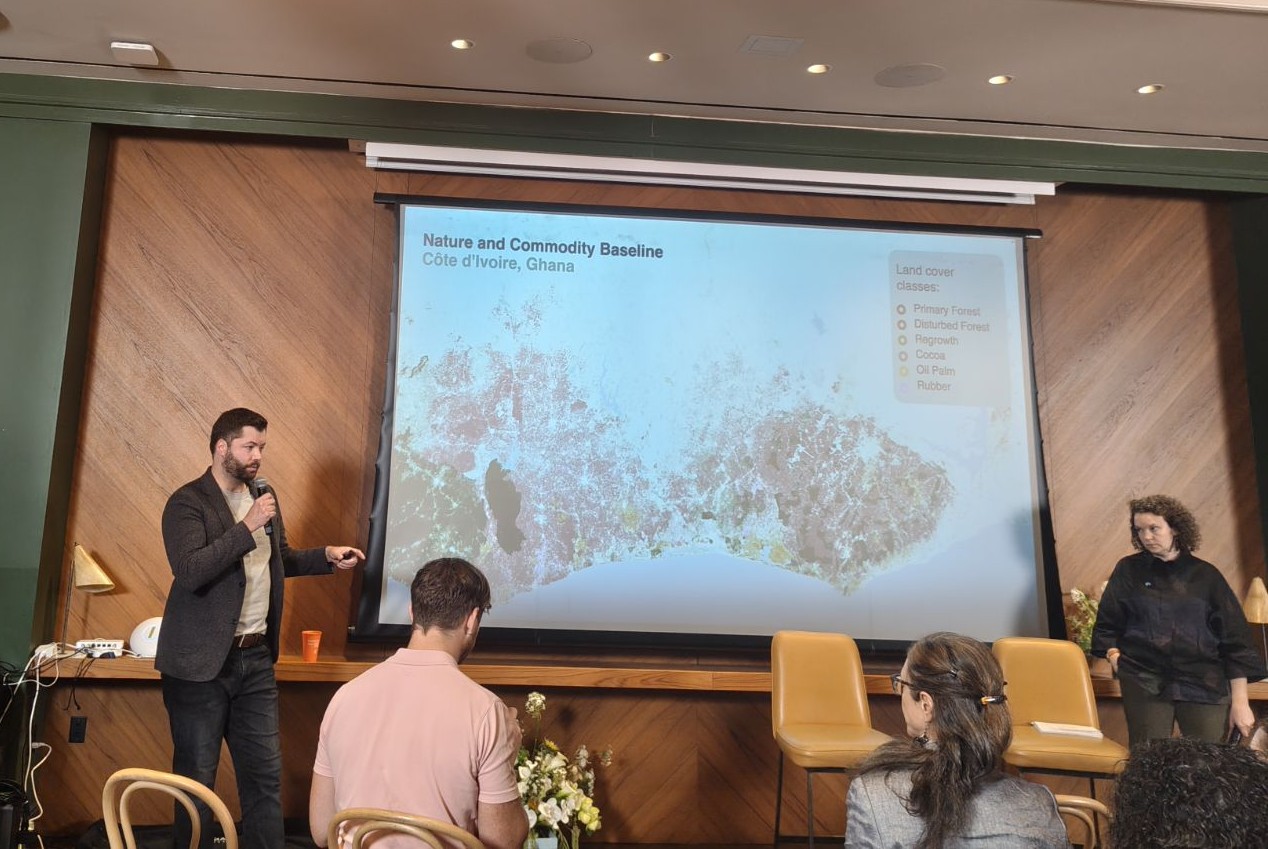
Alan Kroeger, Nature & Climate Director at Satelligence, presents the power of cohesive data through the Satelligence Harmonised Nature & Commodity Baseline.
A need for comparable data also helps to explain the interest our team saw around jdLUC. Rather than treating LUC data in isolation, jdLUC can provide a way to understand land-use dynamics at a jurisdictional level and connect those insights with sourcing and supply chain information. Through these recent partnerships, Satelligence is able to apply jdLUC to areas such as carbon emissions, carbon footprinting, supplier risk, and procurement dynamics.
The broader opportunity is to move from disconnected environmental indicators towards a more coherent picture of the landscapes and supply chains that companies depend on.
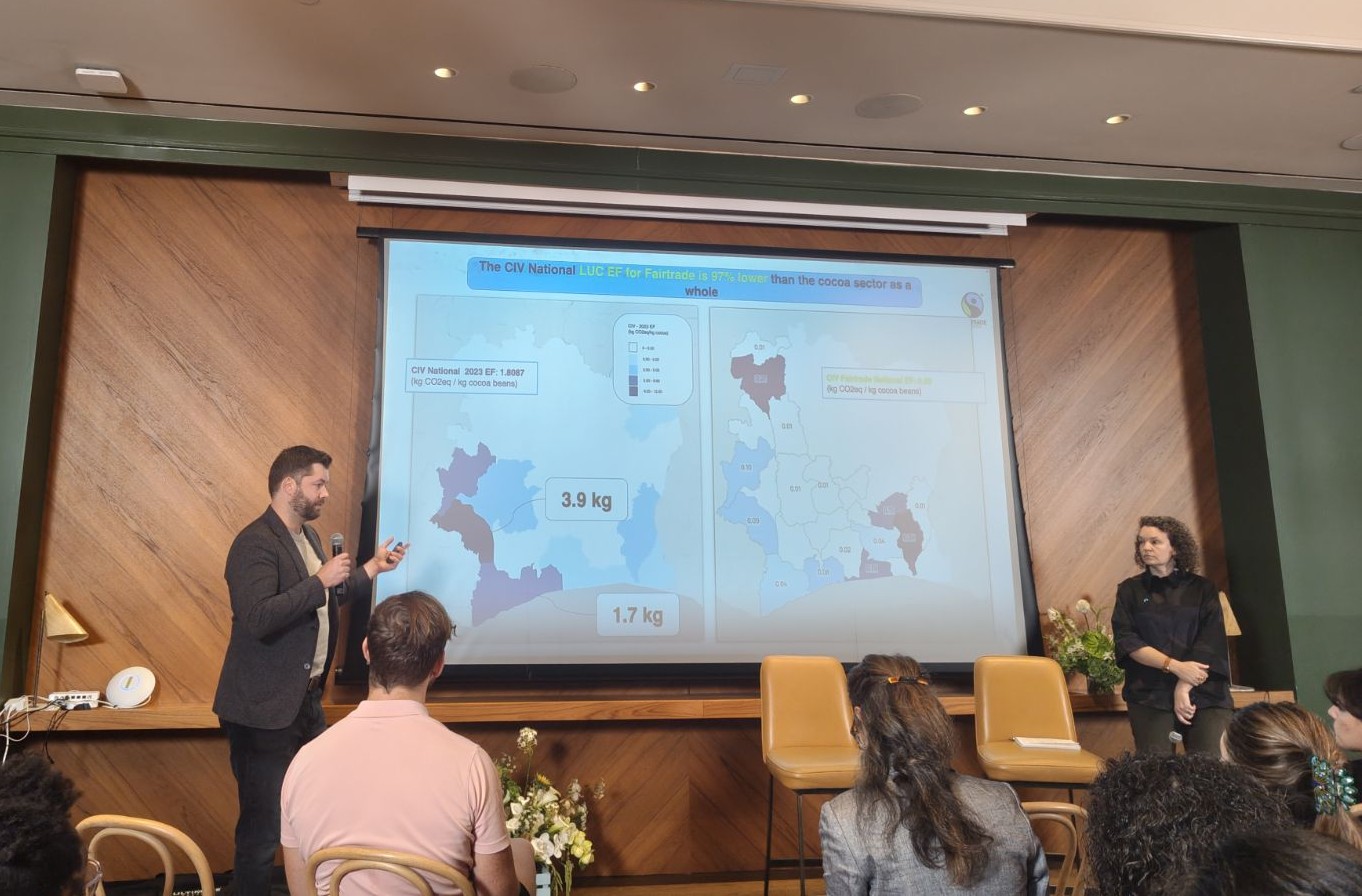
A jurisdictional approach puts land-use and nature intelligence into its wider geographic context, helping companies understand how individual sourcing risks connect to broader patterns of change, governance, and landscape-level impact.
Takeaway
Beyond the current hype around it, resilience is not an abstract sustainability ambition. It is about being able to make robust, confident decisions under changing conditions: where to source, where to invest, where to engage, and where action can truly make a difference.
The conversations at New York Climate Week reinforced a direction we have long seen across the industry. Nature Intelligence has never been about only collecting more data, but rather connecting credible, granular data to the decisions that build resilience – for the businesses that depend on supply chains, the people and communities within them, and the landscapes upon which we all rely.