
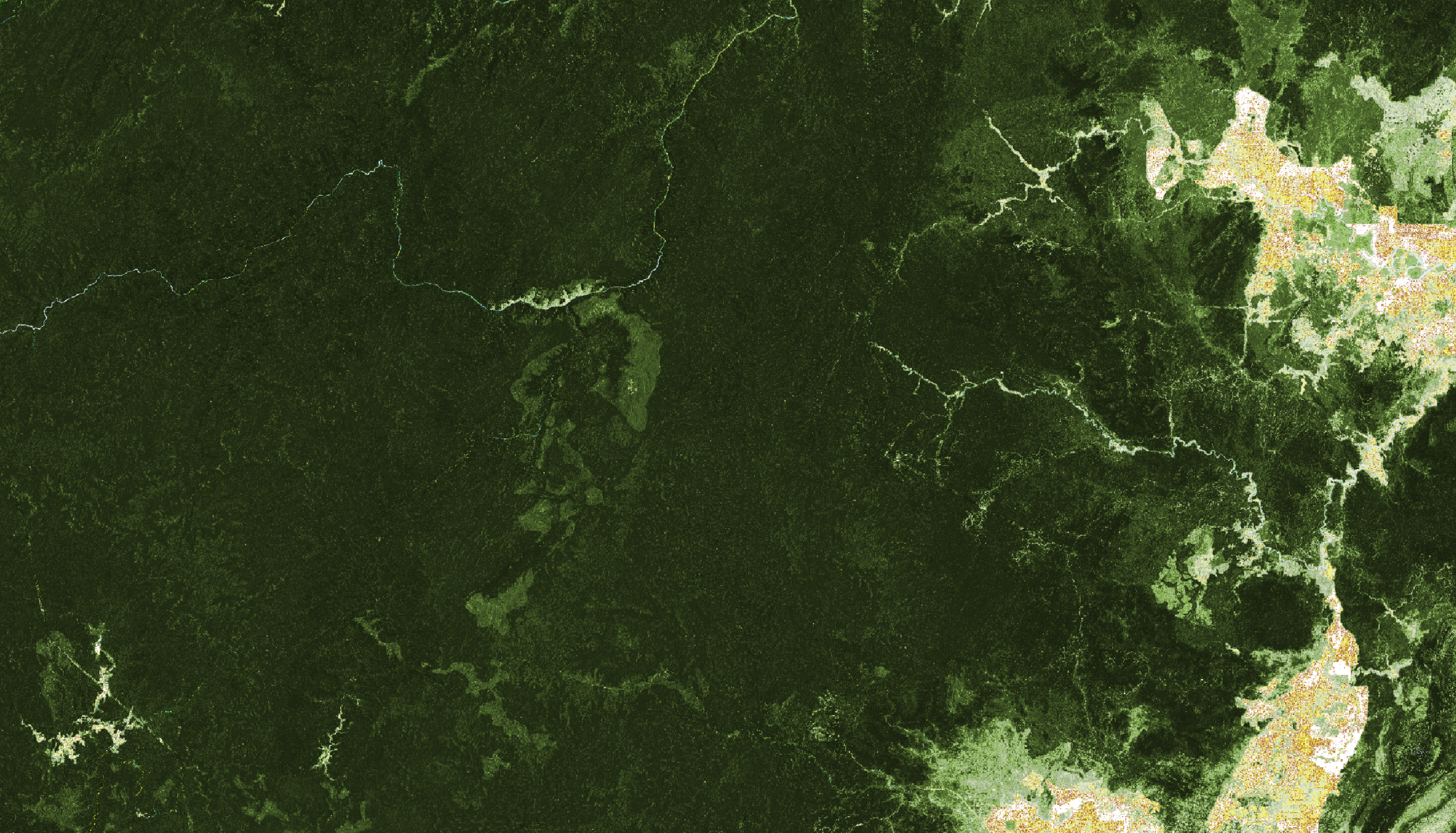
COP26 Glasgow generated significant commitments, but how can these pledges be translated into measurable action?
Here are 5 ways stakeholders are already turning pledges into action.
COP26 saw unprecedented financial commitments to climate action, with the Glasgow Financial Alliance for Net Zero (GFANZ) mobilising an estimated $130 trillion of finance toward the decarbonisation of the global economy. While these commitments are significant, financial resources alone are not sufficient. Their effectiveness depends on robust mechanisms that ensure capital is directed toward intended climate outcomes and supported by credible implementation and accountability frameworks. However, finance must be matched with effective delivery.
Back in 2014, the New York Declaration on Forests (NYDF) aimed to halve deforestation by 2020, but ultimately fell short. The COP26 Declaration on Forest and Land Use, a $20billion commitment to reverse deforestation and land degradation by 2030, sounds great as a headline, but if the plan failed before, what’s to stop it failing again?
Pledges are powered by trust, which in turn is built on the evidence that holds these pledges together.
BlackRock CEO Larry Fink agrees. During his COP26 address he made the point that getting the money is the easy part, the challenge lies in spending it wisely. If companies don’t have adequate, up to date, independent data about the actual climate impact of their efforts, they can’t evaluate them, report on them, invest in them, or trade the resulting carbon credits with confidence.
The sector has come a long way, and at the forest frontline, we know what works and what doesn’t. With actionable data now readily available, the time to make concrete steps towards a deforestation-free future is now. So, what does spending wisely look like?
Here are five concrete examples of what ‘action’ really means that can be carried out right now.
1. Empower commodity producers to demonstrate accountability
Let’s say, you are an agricultural commodities producer, trader, consumer goods brand or retailer. You want to demonstrate your supply chains are free from deforestation, fires, and social conflict, and prove you contribute to a forest and climate positive future.
Our team at Satelligence works closely together with coalitions of corporations to turn their net-zero and no deforestation commitments from pledges into action. Corporations open up to be held accountable, they raise environmental awareness among their suppliers, provide them training and support, and instate time-bound implementation plans. Furthermore, buyers regularly issue ‘stop work orders’ to halt supplier deforestation, they put grievance and complaint procedures in place, alert local government and civil society about risk events beyond their jurisdiction, and exercise their buying power to establish performance-based sourcing contracts. Concrete actions like these build trust and make progress measurable.
The data demonstrates that these initiatives are contributing to meaningful progress, despite often receiving limited public attention:
Deforestation risk varies across regions, suppliers, and time. Explore how satellite intelligence reveals the different trajectories of Malaysia and Indonesia’s palm oil sectors, helping businesses make more informed sustainability decisions.
Initiatives to improve coordinated action on deforestation are advancing. With WRI and WUR we launched the RADD coalition to detect deforestation faster and empower a collective response. And with Proforest, Earthworm and Aidenvironment/Earthqualiser we support the Consumer Goods Forum (CGF) Forest Positive Coalition of Action to implement a collective response framework. The Action for Sustainable Derivatives (ASD) convened a big coalition of derivatives companies and built momentum for action by establishing collective engagement mechanisms. The Rimba Collective raises the bar enabling corporations to not just tackle deforestation, but also protect and restore forest.
Robust measurement is essential for driving accountability and progress.
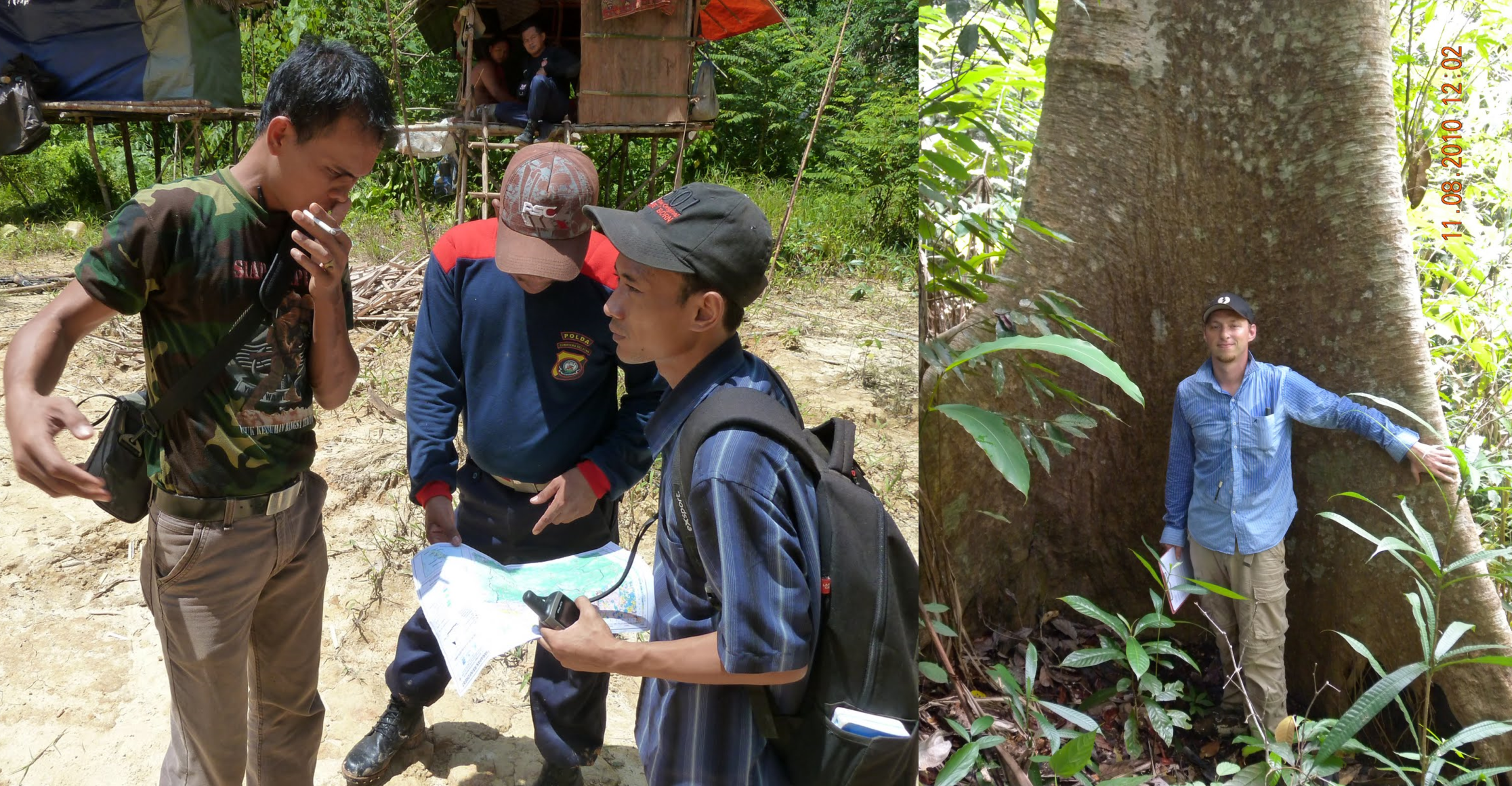
Credible measurement means integrating data from space and from the ground, fusing artificial and human intelligence.
2. Enable the green revolution in the finance sector
Financial institutions (asset managers, pension funds, banks and impact investors) need to know the environmental and social impact of their investments across hundreds of companies, and track the net zero progress of their existing projects and investments.
PwC’s latest report on climate disclosures highlights an industry-wide over-reliance on unreliable statistical models and egregious assumptions about the quality of green investments. This is because the real-world ESG impact is not measured quantitatively, and the data used is often inaccurate or entirely incorrect.
Thankfully, due to technological advances and continued cooperation between stakeholders, the big data picture is now starting to appear. We have the visibility to provide investors with credible, curated sustainability insights – which open data alone cannot provide – while ensuring supplier data privacy is respected and secure. We place petabytes of satellite imagery and AI within the context of millions of farm parcels and other supply chain assets and their ownership registers, leveraging Google Cloud’s power. Everything is traceable, if stakeholders want it to be.
We work with leading financial institutions, such as Robeco and Actiam, whose award-winning ‘Satellite-based engagements towards No-deforestation’ helps to get eyes on the forest-risk commodity supply chains of all companies they invest in. These investors receive independent, science-based performance monitoring on the progress of their assets. The structural integration of satellite insights into the daily processes of financial institutions will build more sustainable investment portfolios. It’s our mission to mainstream this approach to sustainable investments.
Yet, examples of science-based performance monitoring remain scarce in the largely unregulated and often opaque field of green investment monitoring. Risk officers and ESG reporting advisors will be relieved to hear that the International Sustainability Standards Board (ISSB) intends to consolidate the various existing financial reporting requirements under one comprehensive global baseline of International Financial Reporting Standards (IFRS).
3. Democratise access to carbon finance
Imagine, you want to sell or buy carbon credits originating from forest protection, enhancement or restoration, or you want to quantify your Scope 3 emissions (including emissions due to land use conversion during production anywhere in your supply chain).
Stakeholders should avoid mistakes made during the past 20 years, which have driven the market towards quantity at the expense of quality, resulting in cheap but non-credible credits. This is why we are proud to help power the Acorn initiative, a carbon platform set up by Rabobank and Microsoft. Acorn is the world’s first carbon bank scaling to millions of agroforestry smallholder farmers around the world. It supports them to plant trees in the areas where they cultivate their crops, capturing more carbon, increasing biodiversity and generating more income for farmers.
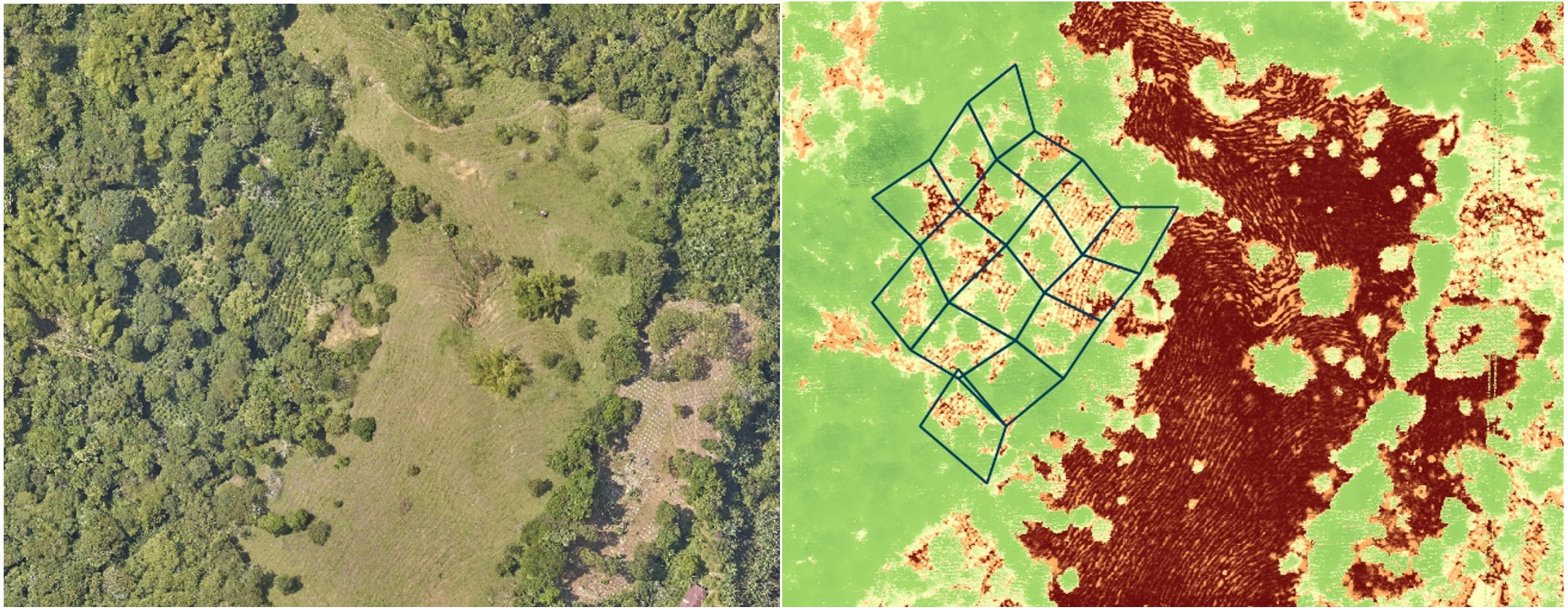
Satellite tree height and cover measurements along with ground data now enables more reliable and credible information on land conversion over the past 40 years, as well as CO2 removal, giving you the certainty and assurance that trees have been planted and that they keep growing. We don’t rely on approximations or assumptions. Through satellite monitoring, the good work of each farmer is accounted for and the carbon market rewards them.
More generally, stakeholders have been holding their collective breath since Paris for an agreement at COP26 on the cooperative mechanisms in Article 6. It should provide an accounting framework for how to trade carbon reductions and outlines how countries can cooperate on reducing carbon emissions.
The resultant carbon credit markets could almost double global emissions reductions by 2035 and cut the financial cost of meeting current Paris Agreement pledges by as much as 79%.
Without credible data to support these markets, their effectiveness and integrity may be compromised.
4. Empower law enforcement and transparency
Forest country government agencies are contending with limited capacity in terms of staff, vehicles and petrol to patrol huge swaths of often remote and poorly accessible forests. This should not stop them from bolstering law enforcement and demonstrating responsible forest management, providing assurance that forest products are sourced in accordance with environmental and social standards.
Our team at Satelligence works with Suriname, the most forested country in the world, to link its Sustainable Forestry Information System – which records all forestry operations for optimal traceability and proof of timber legality – with real-time alerts of logging and conversion from satellites. Our technology makes production control and monitoring more efficient, fully transparent, and trustworthy.
In Uganda, we work with local National Forestry Authority staff and stakeholders, supported by the European Space Agency. Satellites pinpoint where forest within conservation areas have been cleared, then planted crops are uprooted, native tree species replanted, and farmers are compensated. Agreed procedures enable systematic implementation and progress and outcomes are recorded for transparency.
Likewise in Indonesia, we work with local authorities and stakeholders to better protect the habitat of iconic species such as the orang utan, tiger, elephant and rhino. Sending rangers directly to areas that matter most, with independent evidence to resolve the situation.
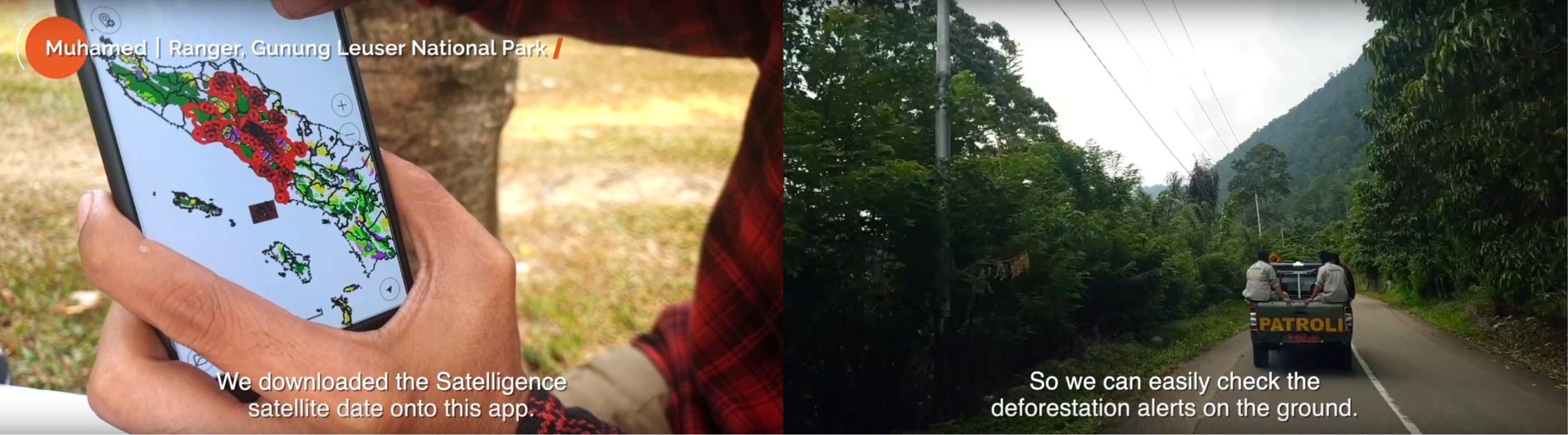
Being able to act on deforestation as it happens by sending people directly to the highest priority areas, makes law enforcement with limited resources much more efficient and affordable. Independent evidence builds trust.
5. Empower local and indigenous communities
Lastly, local and Indigenous communities play a key role in the stewardship of forests – especially in areas where law enforcement is absent or failing.
With satellite-identified high-risk deforestation locations, we can find the communities that need the most help to join the global fight and show donors where to direct their support. Our experience in Brazil, Colombia, and Malaysia shows that data and technology helps to accelerate the engagement of local and Indigenous communities in monitoring to reduce environmental threats.
Integrating real-time satellite detection with community-based and GPS-supported forest crime prevention systems can foster greater engagement from civil society, the media, activists, and the private sector, thereby strengthening advocacy, enhancing information dissemination, and facilitating effective action.
An independent study into our work found that technology-based forest monitoring can lead to up to a 51% decrease in deforestation.
Unfortunately, effective initiatives such as the Forest Forces Foundation – supporting Indigenous communities and forest defenders on the ground at the illegal deforestation frontline in the Brazilian Amazon – remain underfunded. They do the hard and dangerous work, under police protection.
After all, satellites don’t stop deforestation. Humans do.
Yet the satellites, in real-time, can give the actual climate activists – smallholders, indigenous communities and other caretakers of our planet – visibility and credit for what they achieve on the ground.
Looking ahead
All stakeholders have a role to play, including corporations, service providers, scientists, non-governmental organisations, governments, local communities, and consumers. Greater cross-sector collaboration is required, with a need to reduce existing silos that can at times be reinforced by funding structures. The necessary approaches are already known; the focus must now shift decisively to implementation. Available data and derived insights can support accountability and the delivery of robust, time-bound action plans. Progress over the coming decade will depend on coordinated effort and effective execution across all actors.
Let’s turn insight into action!