

Companies can use EUDR compliance tools as a foundation for broader nature risk management by combining supply chain traceability, satellite monitoring, and credible environmental data to identify risks, prioritise action, and inform sourcing decisions.
Multi-purpose intelligence
The EU Deforestation Regulation is a major catalyst for companies improving their traceability and deforestation monitoring, and strengthening their overall supply chain due diligence. But the data and processes developed for compliance can also help businesses understand a wider range of nature-related risks. Whilst EUDR may focus on deforestation, forest degradation, and legality requirements for specific commodities and products, the same underlying intelligence can support a more comprehensive view of the environmental conditions that affect supply chains.
As the December 2026 implementation date approaches, there is now further opportunity to build systems that support both regulatory compliance and long-term business resilience.
What can EUDR compliance tools tell companies beyond deforestation?
A comprehensive and credible EUDR compliance tool can help companies to connect commodities to their origins, assess deforestation risk, and gather evidence to support due diligence. These capabilities provide a valuable starting point for understanding the relationship between supply chains and the landscapes on which they depend.
However, nature-related risks extend beyond forest loss. Agricultural production also depends on water availability, healthy soils, and stable, functioning ecosystems. Changes in these conditions can quickly affect crop yields, sourcing availability, and reliability of supply.
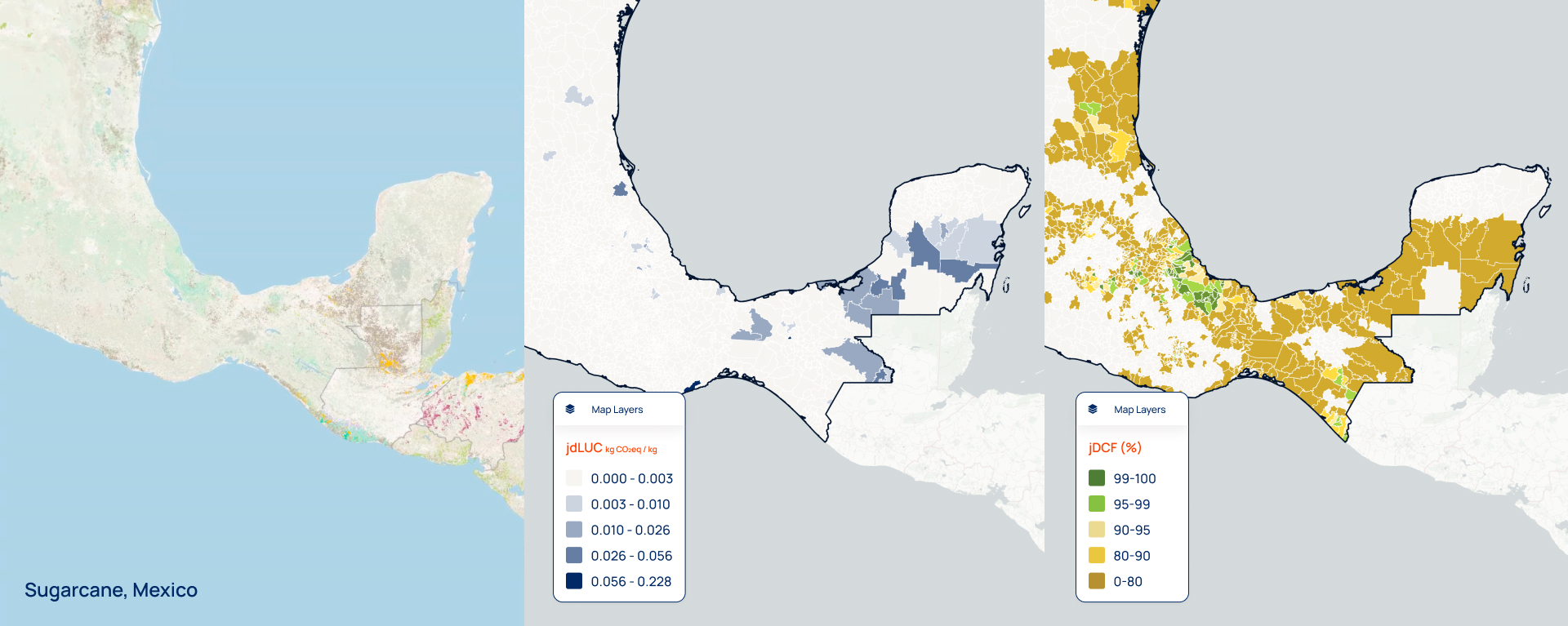
By building on their existing traceability infrastructure, companies can begin connecting supplier locations with additional environmental indicators, including land-use change, carbon emissions, biodiversity, and water stress. Rather than developing separate monitoring systems, a solid EUDR compliance system provides the foundation for broader supply chain management.
How can companies use supply chain data to identify nature risk and opportunities?
A broader understanding of risk starts with knowing where commodities originate and what is truly happening on the ground in those landscapes. Satellite monitoring can help companies to identify changes in forest cover and land use, while geospatial analysis connects these observations to supplier locations, production areas, and sourcing regions. A consistent, harmonised nature and commodity baseline provides the reference needed to interpret changes and assess potential risks.
Combining these capabilities helps companies move from identifying individual incidents to understanding patterns across their supply chains. For example, a company sourcing agricultural commodities froma region experiencing increasing land-use pressure may need to investigate whether its suppliers are exposed to deforestation risk or other environmental instability. This information can help procurement and sustainability teams to prioritise investigations, engage suppliers, and direct investment towards areas where intervention may have most impact.
Credible data is essential here. Satellite observations need to be interpreted in context, with appropriate validation and clear documentation of the methodology and findings. Not every change in tree cover indicates deforestation, and not every environmental signal is a confirmed supply chain risk.
How can nature intelligence improve sourcing decisions?
The value of nature intelligence lies in how it informs decisions. When ecosystem monitoring is connected to supply chain information, companies can use the insights to:
- Prioritise supplier engagement: Focus efforts on suppliers or sourcing regions where credible evidence indicates potential risks
- Strengthen risk management: Identify emerging environmental pressures that could affect future sourcing availability, as well as compliance concerns
- Improve internal alignment: Give Sustainability, Procurement, and Compliance teams a consistent evidence base for evaluating risks and agreeing on actions
- Support overall sustainability commitments: Use relevant environmental indicators to inform broader Deforestation- and Conversion-Fee (DCF) commitments, climate targets, and nature-related assessments
This approach helps companies move beyond reactive compliance towards more informed, forward-looking sourcing strategies. Beyond this, it also creates opportunities for connecting nature risk management with business priorities.
Case study: Nissin Food Holdings
For Nissin Food Holdings, understanding forest change is part of building a more sustainable palm oil supply chain. Working with Satelligence, Nissin has expanded its forest monitoring to cover Indonesia, Malaysia, and its wider global palm oil supply chain.
The insights help Nissin connect forest changes to its suppliers, distinguish natural forest loss from plantation replanting, and identify where supplier engagement and on-the-ground smallholder support can make a difference. The data also supports Nissin’s wider work on nature-related risks, including its TNFD LEAP analysis.
As Kaya Tanii, Head of Sustainability Strategy at Nissin Food Holdings, explains:
“Our collaboration with Satelligence has transformed our sustainability initiatives by turning complex challenges into clear, data-driven actions that create measurable impact.”
This is a good example of how forest monitoring can do more than flag potential deforestation. With the right data and context, it can help companies understand their supply chains, focus their efforts and make more informed sourcing decisions.
What should companies prioritise when extending EUDR tools to broader nature risk?
At this stage, ensuring its EUDR due diligence process is sound and defensible should be a company’s first priority. Broader nature risk-based supply chain management should build from this foundation.
These are the three most important points to consider:
- Start with credible, consistent data
Environmental indicators are only useful when based on trusted data. A consistent baseline is critical to avoid conflicting assessment across commodities, regions, and reporting frameworks. - Connect environmental insights to supply chain traceability
Data about a landscape becomes more actionable when it can be linked to sourcing locations and supplier relationships. Teams can move towards a more granular understanding of potential exposure. - Translate findings into decisions
Monitoring alone does not reduce risk; companies need processes for investigating alerts, engaging suppliers, documenting conclusions, and taking appropriate action.
These foundations support defensible EUDR due diligence today, whilst creating a practical starting point for managing wider supply chain risks over time.
Key takeaway: Use EUDR compliance as the springboard for supply chain resilience
EUDR is an important driver of improved supply chain visibility, but its value can go well beyond a specific regulatory framework. The traceability, monitoring, and evidence developed for due diligence can also help companies to understand their dependence on nature and identify where changes in the environment may impact on their operations.
Satelligence combines satellite-derived insights, supply chain data, and credible environmental intelligence to help businesses monitor deforestation and other nature-related risks across their sourcing landscapes. The goal is to provide companies with a clearer, more consistent understanding of the landscapes behind their commodities, enabling more confident sourcing decisions and long-term business resilience.