
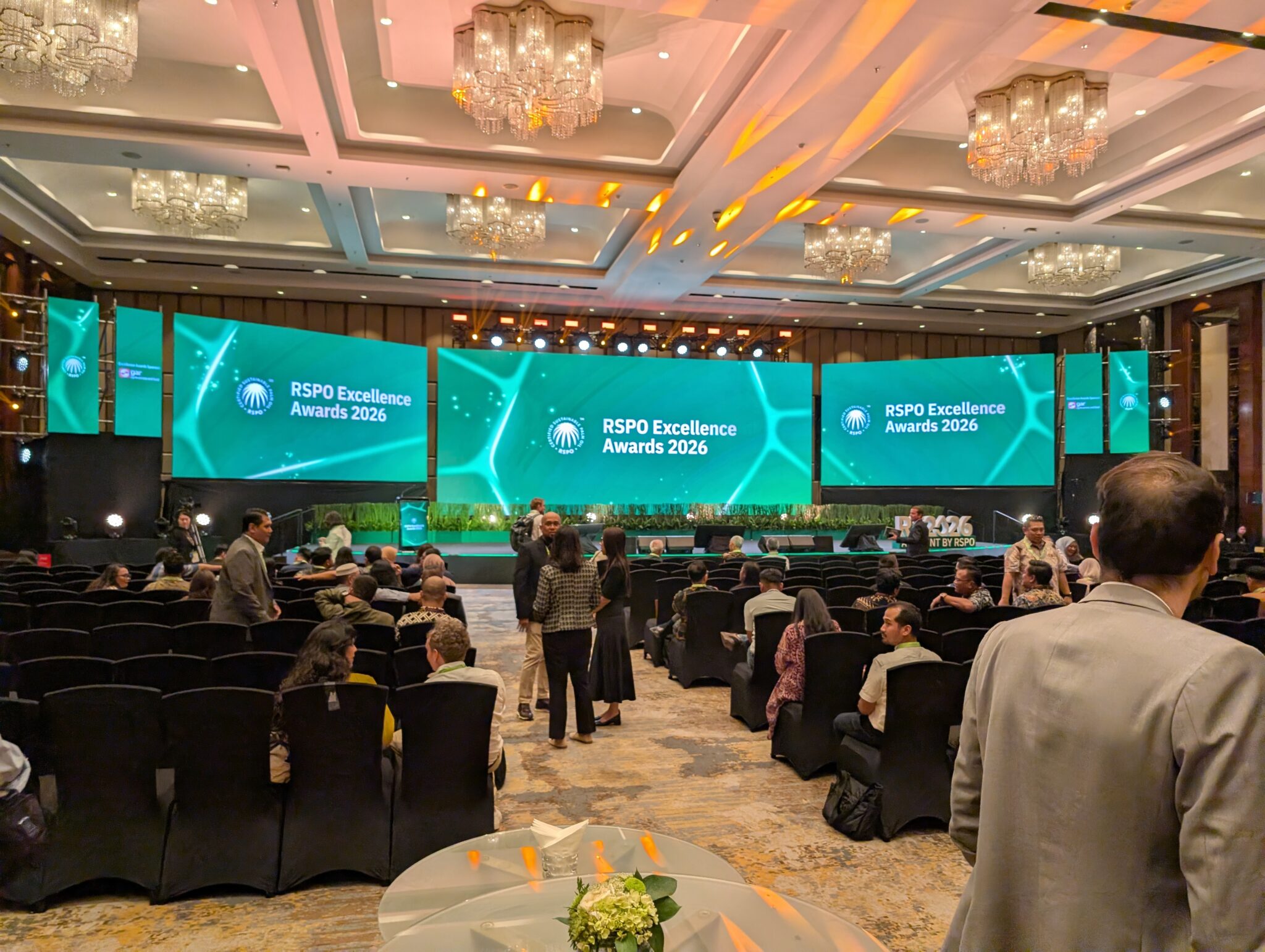
Our Satelligence team has returned from Jakarta, where stakeholders from across the global palm oil industry gathered for the 2026 RSPO Round Table, under the theme “Strong foundations: Impact in action.”
Against the backdrop of severe fires currently sweeping across Indonesia and growing concerns about the impacts of a super El Niño, the urgency of protecting tropical landscapes was at the forefront of many minds. In the conversations our team had with clients and industry peers, there was a growing emphasis on practical, measurable, meaningful action that goes further than strategies and commitments.
What do we mean by “meaningful action”?
Environmental frameworks such as EUDR and NDPE continue to shape conversations across the palm oil sector, with businesses focused on demonstrating compliance and ensuring that their supply chains meet increasingly demanding requirements. But in a sector as complex as palm oil, meeting these requirements involves more than monitoring deforestation at individual plantation level. Businesses need to understand what is happening across their wider sourcing landscapes, navigate different land use contexts, and work with suppliers to address risks throughout their supply chains.
The broader opportunity is to make the most of the processes and vast amounts of data that has been collected and established for compliance. Beyond identifying deforestation risk, nature and climate intelligence can help businesses to understand wider environmental impacts, assess progress over time, and identify where interventions can make the greatest difference.
This means moving from a largely reactive approach to compliance towards using Nature Intelligence to inform sourcing decisions, investment, and long-term landscape management.
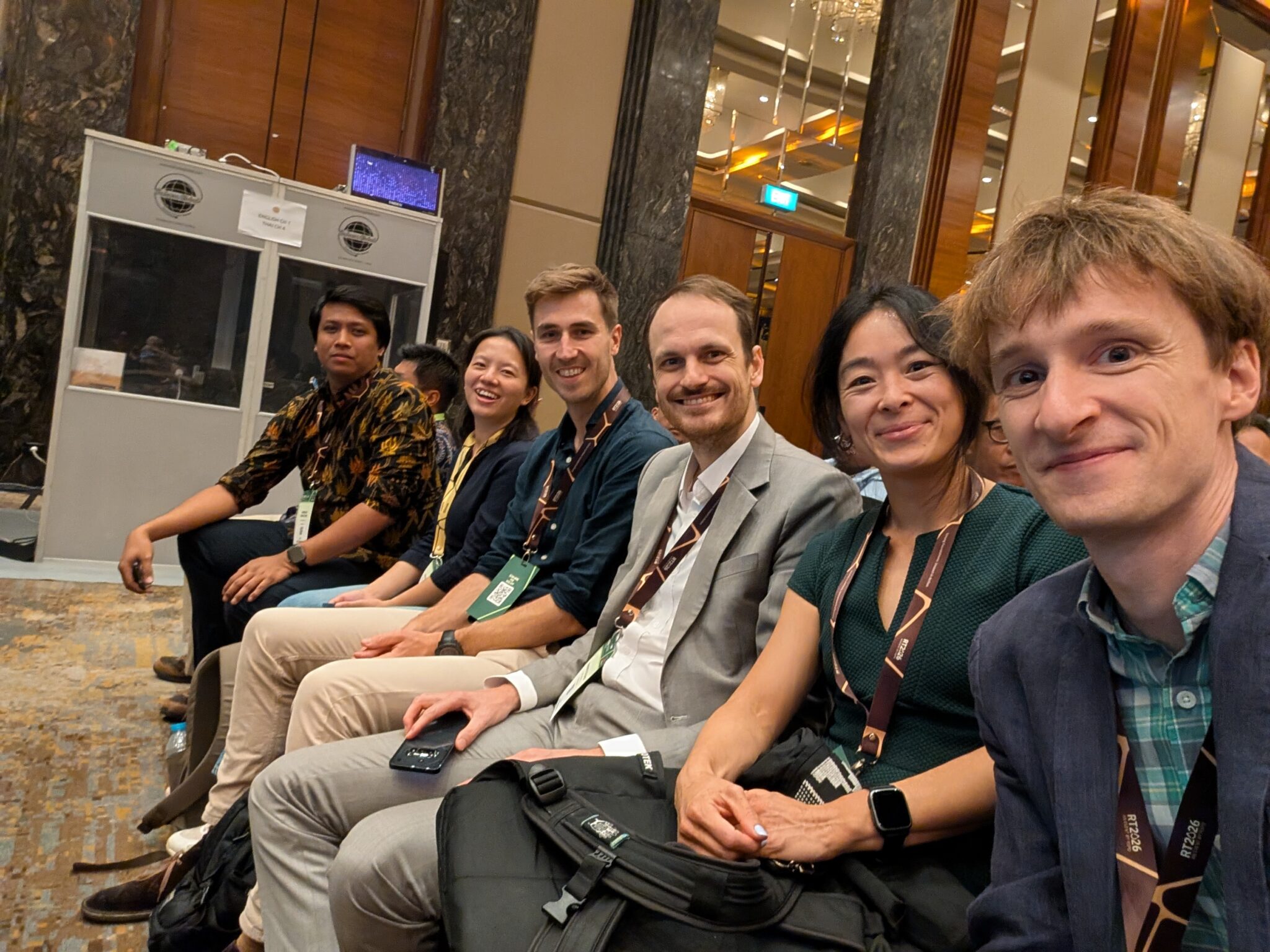
Satelligence team attending RSPO Round Table 2026
Credible data is the foundation for confident decisions
As businesses increasingly rely on geospatial data to assess environmental performance and manage supply chain risk, confidence in the underlying data remains absolutely essential. For palm oil regions, agricultural expansion, plantation development, and natural forest can exist in close proximity. Different datasets, methodologies, and geographical reference layers can produce different perspectives on land use change. An ability to distinguish between different land use types is therefore fundamental to understanding where deforestation risk really lies.
The challenge goes beyond simply accessing more environmental data; there is a need to estable a consistent and reliable picture of what is truly happening across landscapes and supply chains. This gives companies a stronger basis for assessing risk, engaging suppliers, and making decisions that they can confidently stand behind.
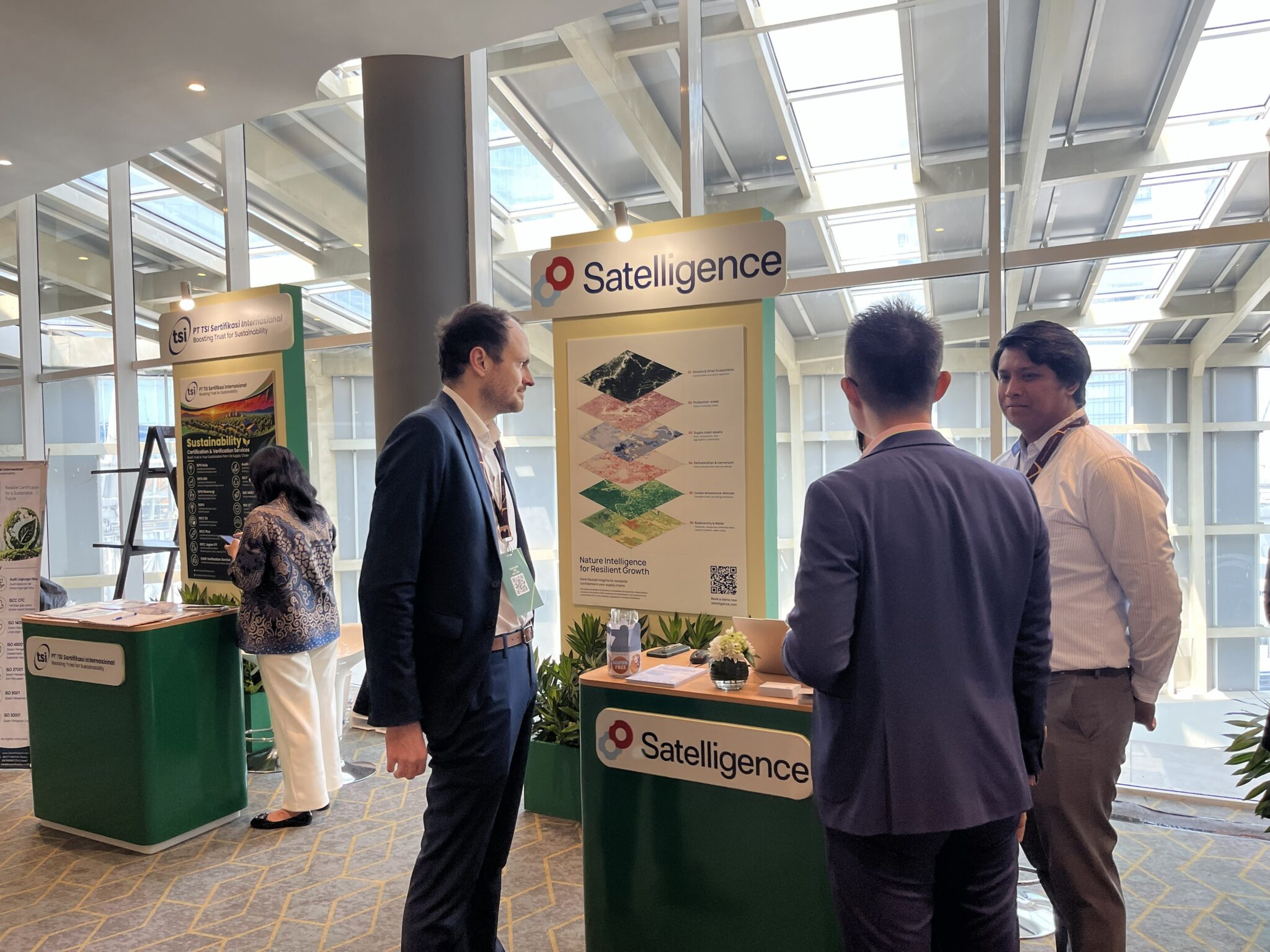
Satelligence team presenting Nature Intelligence for business resilience
Collaboration is essential
The complexity of global supply chains means that no single company or solution provider can address the challenges of deforestation and nature risk alone. The RSPO Round Table provides an important opportunity to bring together the different actors involved in the sustainable palm oil value chain, from producers and traders, to downstream businesses, experts, and stakeholders. Progress depends on the collaboration between these actors, all combining different areas of expertise to address the challenges across the supply chain.
This also means connecting strategic ambitions with practical implementation. Collaboration can help to translate environmental insights into action on the ground; for example, improving traceability and supplier engagement, or identifying opportunities for targeted interventions. That is what Satelligence proposes with Nature Intelligence.
Industry expectations will continue to evolve, and so too does the opportunity to bring the abovementioned capabilities into the sectors and commodities that face nature-related challenges.
Key takeaway from the event
The conversations at the RSPO Round Table have reinforced the focus we’ve seen across many 2026 industry events: beyond commitments and any singular legislation, lasting impact can only come from practical decisions and implementation.
Credible Nature Intelligence has an important role to play; by connecting reliable geospatial data with supply insights, businesses can better understand where risks lie and make more informed decisions about where action matters most.
At Satelligence, we are looking forward to continuing such conversations and working together with partners and clients to turn these strong data foundations into truly meaningful impact.
Event summary
- Navigating evolving regulations: As EUDR and ongoing NDPE commitments take centre stage, the industry is increasingly seeking reliable, science-backed data to confidently verify compliance and streamline reporting.
- Holistic climate action: The conversation surrounding sustainable palm oil is rapidly expanding beyond historical deforestation. Companies are now looking toward broader climate metrics, including landscape-level carbon insights and advanced biodiversity monitoring. An emerging need for fire mitigation is also an example of this holistic approach. Even as sustainability targets grow more complex, tracking and quickly responding to fire hotspots remains an urgent, foundational priority across the palm oil sector.
- Ecosystem collaboration: Tackling ambitious goals requires closing the gap between high-level strategy and on-the-ground execution. There is a strong industry push toward collaborative approaches to better manage traceability, grievances, and supplier engagement.